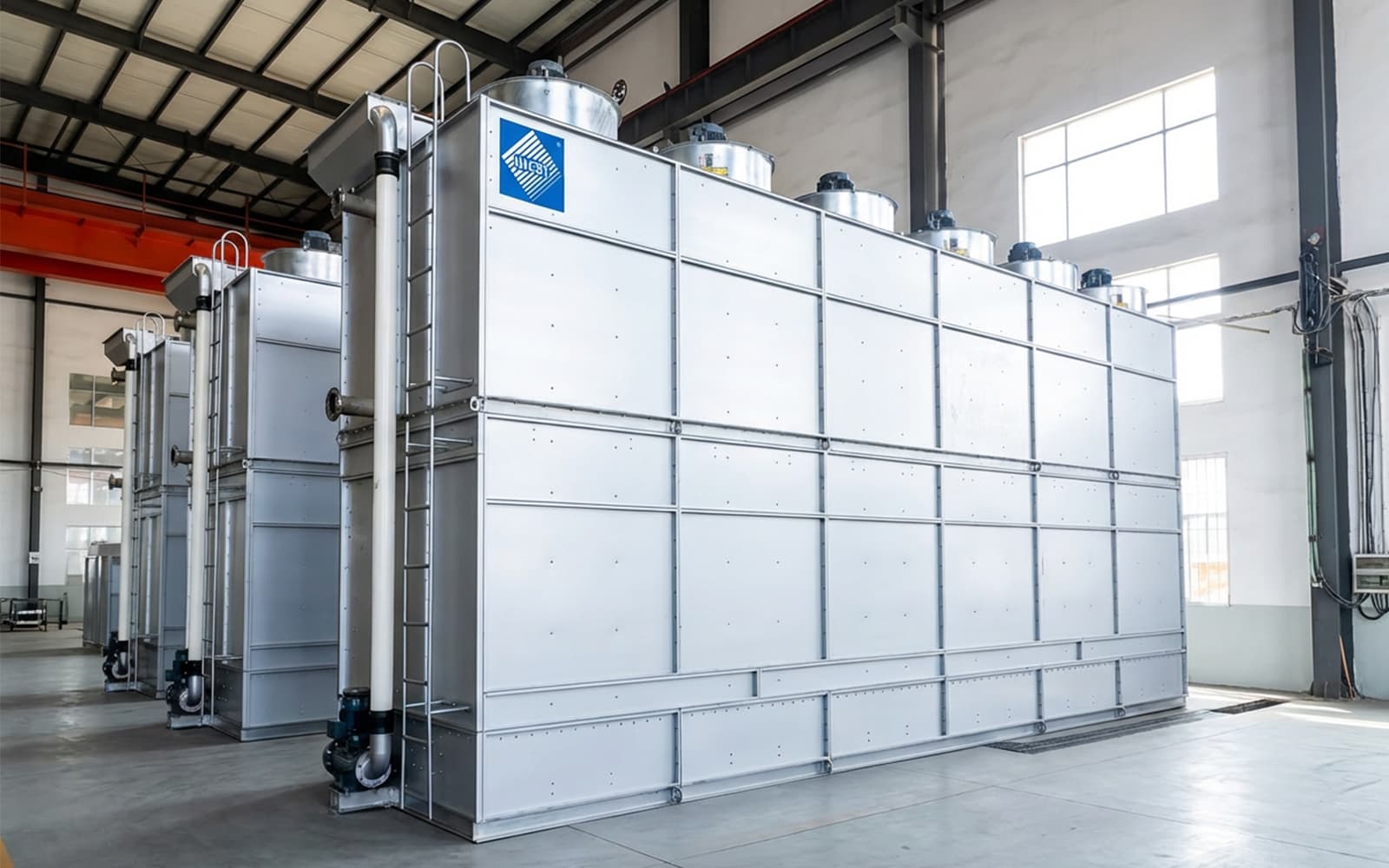
BHX Combined Flow Closed Circuit Cooling Tower
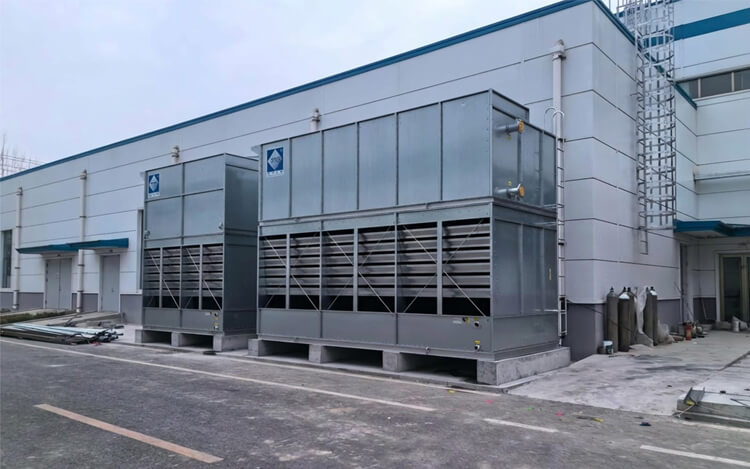
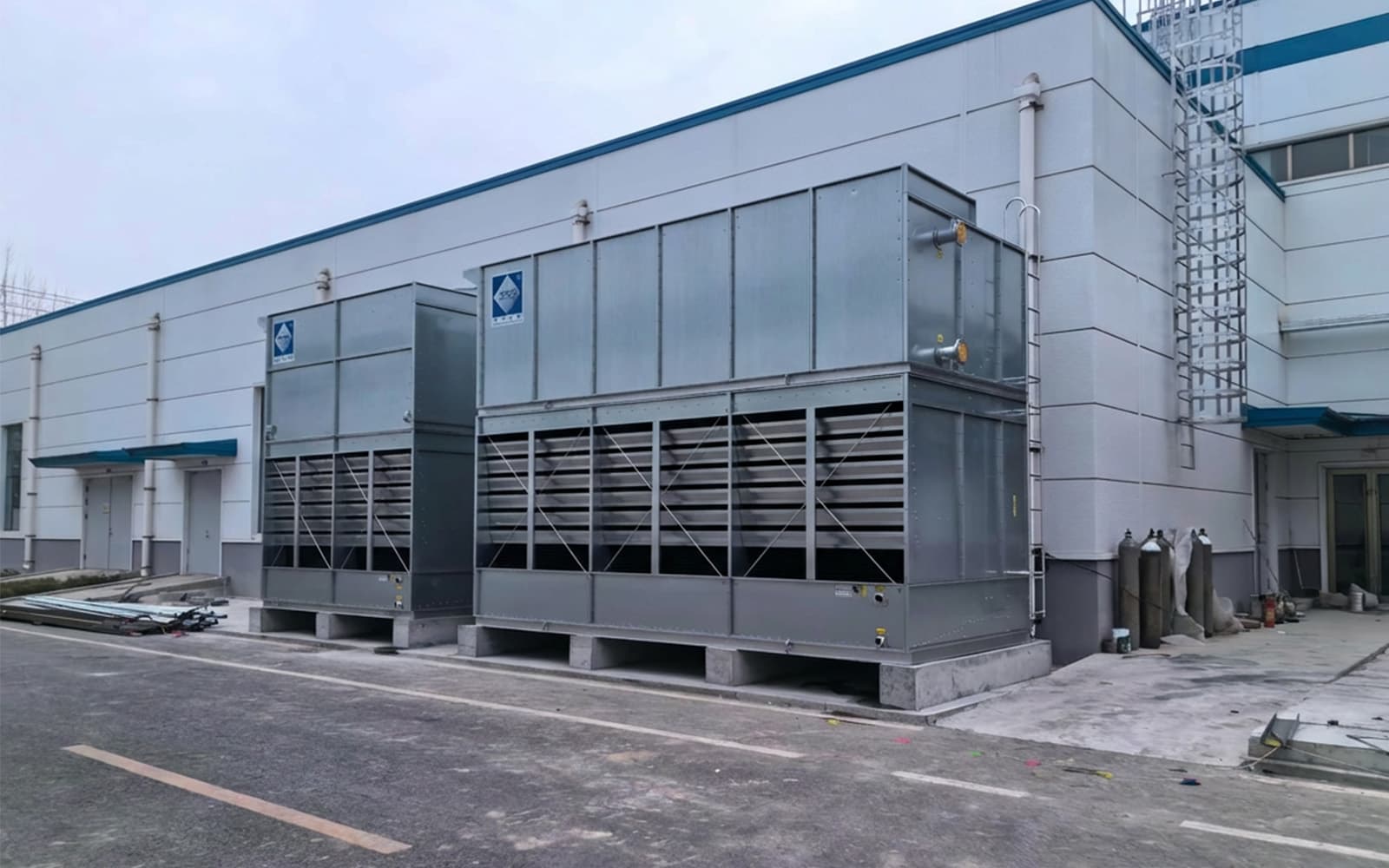
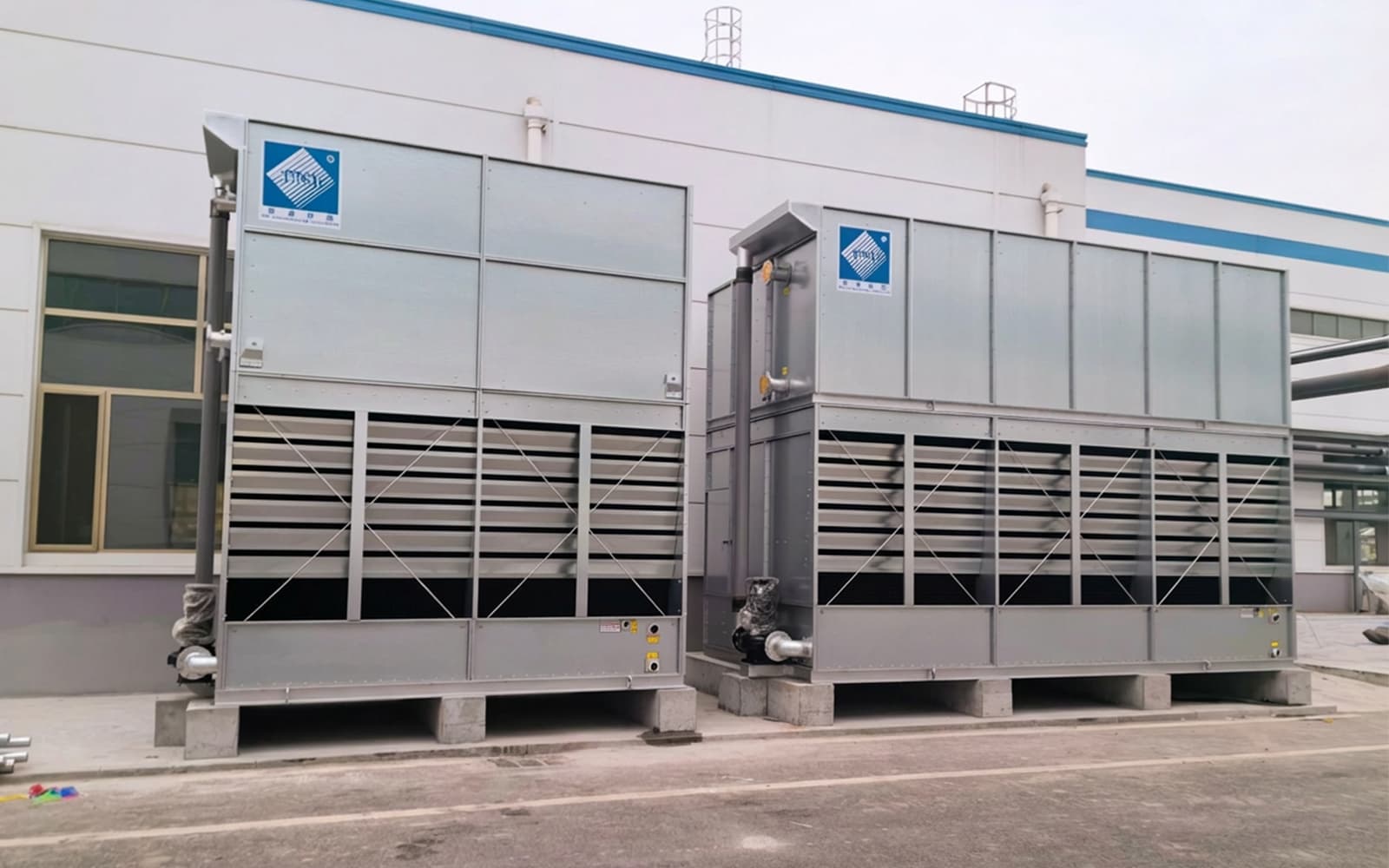
BHX Combined Flow Closed Circuit Cooling Tower
- Product Origin: China
- Delivery Time: 15-25 Working Days
- Supply: Factory Direct Supply
Closed circuit cooling tower provides many operational and maintenance benefits to the user by keeping the process fluid in a clean, closed loop.
Product Description
BHX Combined Flow Closed Circuit Cooling Tower
Closed Circuit Cooling Towers are routinely selected for numerous commercial and industrial process cooling Applications.Some examples include:
BHX Combined Flow Closed Circuit Cooling Tower Principle of Operation
The process fluid to be cooled is circulated within a serpentine cooling coil, which is continually wetted on the outside by the spraying water system. The heat is transferred by the wall of coil, becomes saturated steam when it meets spray water and air. Then the heat will be discharged into atmosphere by fan, but water will be collected in the basin by drift eliminator for recirculated spraying. The temperature of spraying water is reduced by PVC fill. spraying water flows in the same direction as the fresh air, to cool coil mainly by significant heat conduction way, which is especially suitable to the cases when cooling tower outlet temperature is much closer to the wet bulb temperature.
Parallel air and water path as well as the combination of coils and PVC fill, this effectively avoid the dry spot and scale formation, and
- Closed Circuit Cooling Towers
- Evaporative Condenser
- Open Cooling Tower
- Dry Cooler/Adiabatic Cooler
- Accessories
- Heat Pipe Exchanger
- Protect process fluids from contamination
- Maximize system efficiency by reducing fouling and scaling tendencies
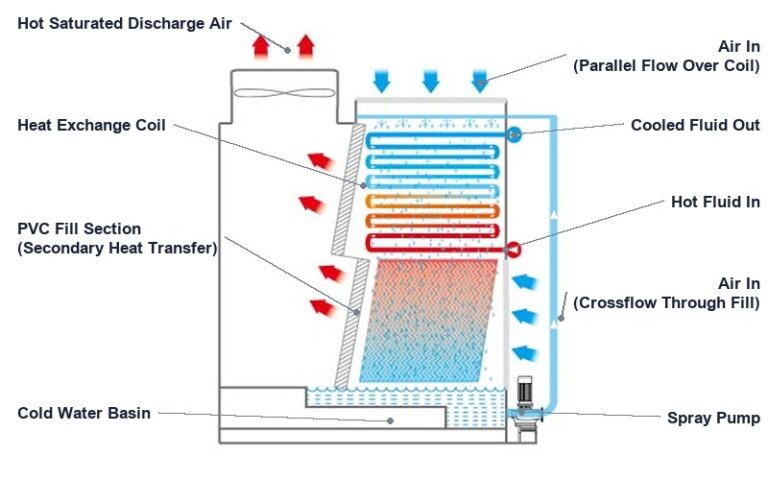
- Internal Circuit (Closed Loop): The hot process fluid (e.g., water or a glycol mixture) circulates safely inside the serpentine heat exchange coil, completely isolated from outside contamination.
- External Circuit (Spray Loop): A separate loop of spray water is continually pumped from the base basin to the top of the tower, where it is sprayed over the outside of the closed coil and drips down through the PVC fill.
- Initial Heat Exchange: As the process fluid travels through the coil, heat is transferred through the metal tube walls to the ambient spray water cascading on the outside of the coil.
- Evaporative Heat Rejection: A mechanical fan pulls fresh air into the tower. The air and spray water move together in a parallel flow over the coil, which causes a portion of the spray water to evaporate. This phase-change pulls substantial heat away from the closed coil.
- Supplementary Cooling (The Fill): The warmed spray water continues to fall into the PVC fill section, where it meets a fresh crossflow of ambient air. The fill dramatically increases the surface area of the water, allowing further sensible heat transfer and cooling.
- Recirculation: The now-cooled spray water collects in the tower basin. A drift eliminator captures any stray moisture, and the water is recirculated back to the top of the tower by the spray pump.
| Type | Nominal Water Flow (m³/h) | Fan | Pump Motor | Connection Diameter DN (mm) | Approx. Weight (kg) | Dimension (mm) | |||||
|---|---|---|---|---|---|---|---|---|---|---|---|
| Qty | Power (kW) | Air Volume per Unit (m³/h) | Qty | Power (kW) | Spray Water Flow per Unit (m³/h) | Shipping Weight | Operating Weight | L*W*H | |||
| BHX-30 | 33 | 1 | 3 | 46,000 | 1 | 1.1 | 36 | DN80/DN80 | 2,230 | 3,570 | 1825*2380*4220 |
| BHX-40 | 43 | 1 | 4 | 60,000 | 1 | 1.1 | 53 | DN100/DN100 | 2,510 | 3,690 | 1825*2380*4220 |
| BHX-50 | 51 | 1 | 5.5 | 65,000 | 1 | 1.1 | 53 | DN100/DN100 | 2,780 | 4,130 | 1925*2380*4220 |
| BHX-60 | 61 | 1 | 5.5 | 75,000 | 1 | 1.5 | 70 | DN100/DN100 | 3,380 | 5,050 | 1925*2980*4240 |
| BHX-70 | 70 | 1 | 7.5 | 87,000 | 1 | 1.5 | 70 | DN100/DN100 | 3,820 | 5,910 | 1925*2980*4450 |
| BHX-85 | 88 | 2 | 5.5 | 65,000 | 1 | 2.2 | 100 | DN125/DN125 | 4,100 | 6,260 | 3570*2380*4240 |
| BHX-100 | 105 | 2 | 7.5 | 71,000 | 1 | 2.2 | 100 | DN125/DN125 | 5,010 | 7,680 | 3570*2380*4470 |
| BHX-125 | 128 | 2 | 5.5 | 75,000 | 1 | 3 | 150 | DN125/DN125 | 6,020 | 10,160 | 3770*2680*4870 |
| BHX-150 | 152 | 2 | 7.5 | 87,000 | 1 | 3 | 150 | DN125/DN125 | 7,020 | 11,220 | 3770*2980*4870 |
| BHX-175 | 176 | 3 | 5.5 | 71,000 | 1 | 4 | 180 | 2-DN125/2-DN125 | 8,020 | 13,890 | 5610*2680*4910 |
| BHX-200 | 201 | 3 | 7.5 | 79,000 | 1 | 4 | 180 | 2-DN125/2-DN125 | 8,560 | 14,460 | 5610*2680*4910 |
| BHX-225 | 226 | 3 | 7.5 | 87,000 | 1 | 5.5 | 233 | 2-DN125/2-DN125 | 9,700 | 15,990 | 5610*2980*4910 |
| BHX-250 | 260 | 3 | 7.5 | 100,000 | 1 | 5.5 | 233 | 2-DN125/2-DN125 | 11,000 | 17,200 | 5610*3410*4910 |
| BHX-300 | 300 | 4 | 7.5 | 87,000 | 1 | 7.5 | 286 | 2-DN125/2-DN125 | 13,200 | 20,510 | 7450*2980*4910 |
| BHX-350 | 350 | 4 | 7.5 | 100,000 | 2 | 3 | 150 | 2-DN150/2-DN150 | 14,140 | 21,140 | 7450*3210*4910 |
| BHX-400 | 420 | 4 | 11 | 120,000 | 2 | 3 | 150 | 2-DN150/2-DN150 | 15,400 | 23,400 | 7450*3510*4910 |
| BHX-450 | 460 | 5 | 7.5 | 100,000 | 2 | 4 | 180 | 2-DN150/2-DN150 | 17,250 | 26,200 | 8630*3510*4910 |
| BHX-500 | 505 | 5 | 11 | 120,000 | 2 | 4 | 180 | 2-DN150/2-DN150 | 19,100 | 29,100 | 9580*3510*4910 |
1. What is a combined flow closed circuit cooling tower?
A combined flow closed circuit cooling tower is an evaporative cooling system that uses both a heat exchange coil and a fill section to improve cooling performance. The process fluid circulates inside a sealed coil, while spray water and air flow outside the coil to remove heat. Since the process fluid does not contact outside air or spray water, the system helps keep the circulation loop clean and stable.
2. What is the difference between combined flow and counterflow closed circuit cooling towers?
A counterflow closed circuit cooling tower mainly relies on upward airflow against downward spray water around the coil. A combined flow closed circuit cooling tower combines coil heat exchange with an additional fill section, allowing part of the heat to be removed more efficiently through the spray water loop. Combined flow models are often selected when higher efficiency, stable performance, or larger cooling capacity is required.
3. What is the difference between combined flow and crossflow closed circuit cooling towers?
In a crossflow closed circuit cooling tower, air flows horizontally across the falling spray water and coil. In a combined flow closed circuit cooling tower, the system integrates both coil cooling and fill cooling, allowing the spray water to release additional heat before returning to the basin. This structure can improve overall heat transfer efficiency and reduce the thermal burden on the coil.
4. What information is needed to select the right model?
To select the right model, the following information is usually required: cooling capacity, fluid flow rate, inlet fluid temperature, outlet fluid temperature, local wet bulb temperature, fluid type, working pressure, power supply, installation environment, and material requirements. For industrial projects, site space, noise limits, water quality, and anti-corrosion requirements should also be considered.
5. What information is needed for a quotation?
For an accurate quotation, please provide the required cooling capacity, process fluid flow rate, inlet and outlet temperature, local wet bulb temperature, fluid type, power supply, preferred material, installation location, and any special requirements such as low noise design, stainless steel construction, anti-corrosion coating, or limited installation space.
Interested in this product?
Contact our engineers for a tailored quotation and technical drawings.
 English
  Chinese
  Arabic