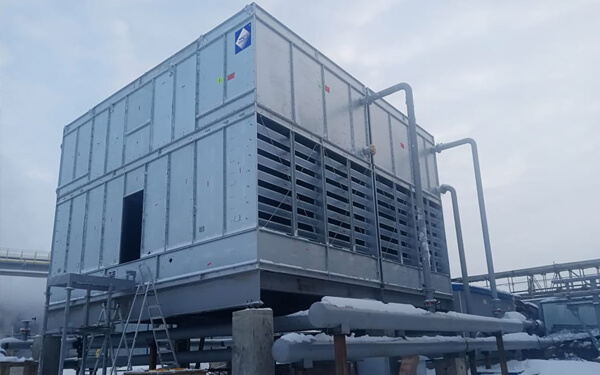
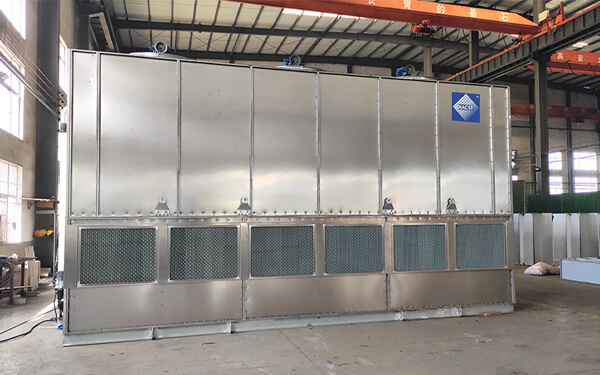
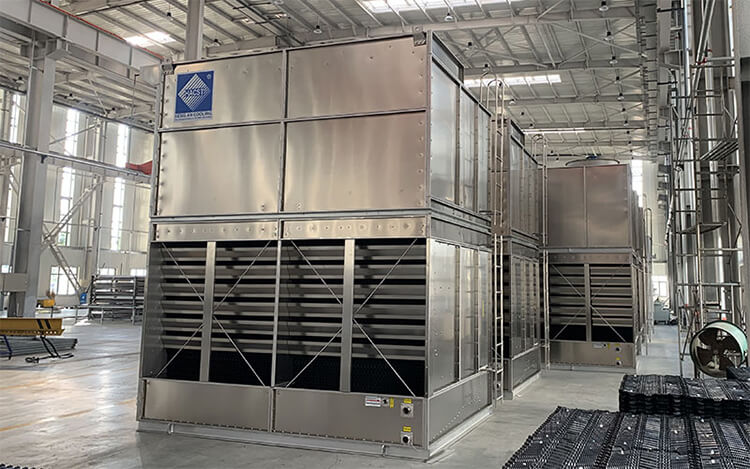
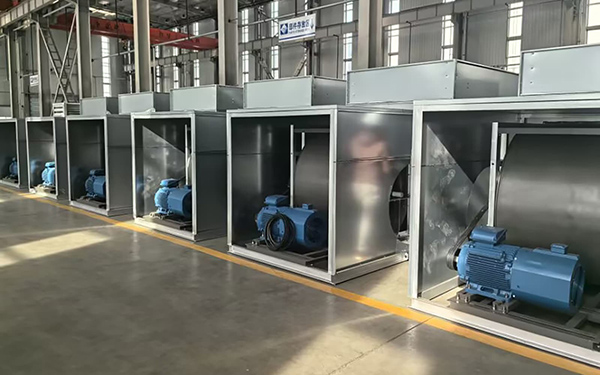
HACST evaporative condensers (ZCX / ZNX / ZHX / ZNC series) condense refrigerant efficiently using combined air-water heat exchange in cross-flow, counter-flow, combined-flow and centrifugal-fan types.
Evaporative Condenser Applications
An evaporative condenser combines air movement and water evaporation to condense refrigerant efficiently in refrigeration and process cooling systems. Compared with fully air cooled solutions, evaporative heat rejection can be useful where lower condensing temperatures and compact equipment size are important. Typical applications include cold storage, food processing, seafood processing, chemical refrigeration, industrial refrigeration rooms and other systems that require stable condenser performance.
HACST provides different evaporative condenser configurations, including cross-flow, counter-flow, combined-flow and centrifugal-fan options. Selection should consider refrigerant type, heat rejection capacity, condensing temperature, wet-bulb temperature, water quality, site layout and maintenance access. By matching the condenser design to the refrigeration system, users can improve operating stability and support efficient long-term heat rejection without relying on a one-size-fits-all product.
 English
  Chinese
  Arabic